Alone Together: How Ambient Music Quietly Became America's Answer to the Loneliness Epidemic
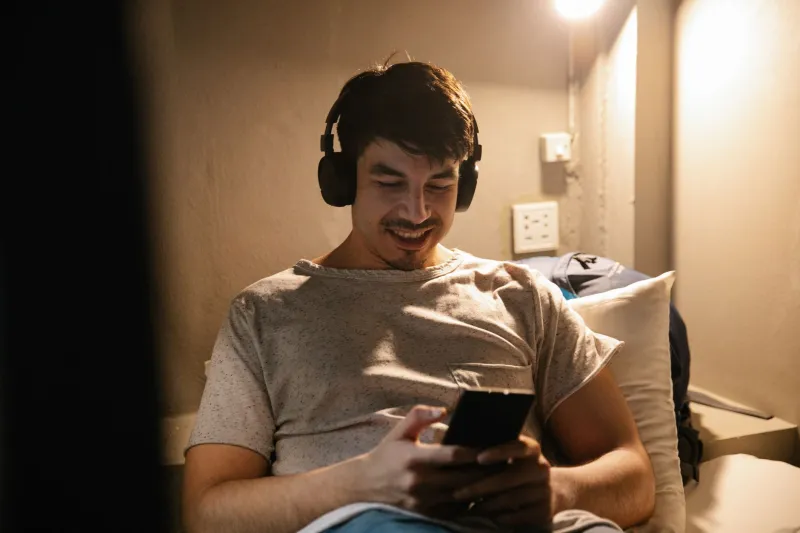
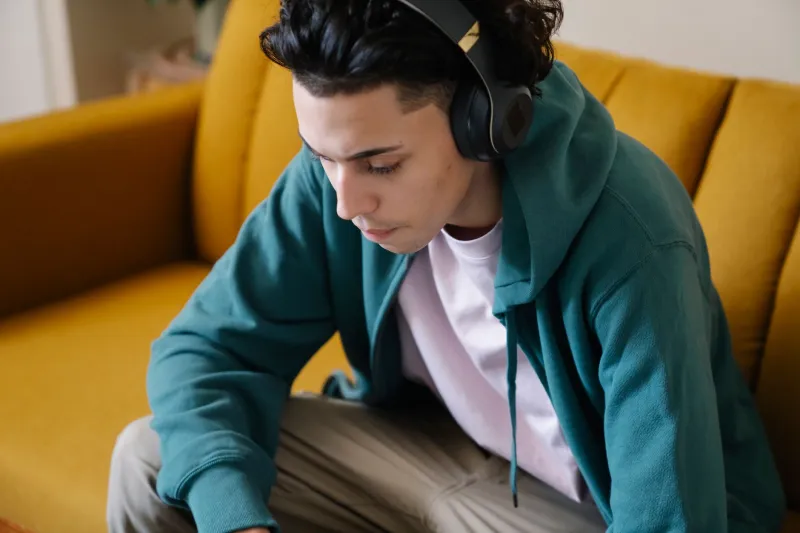
There's a particular kind of silence that settles into an apartment at 11 p.m. on a Tuesday. No roommates, no TV chatter, just the low hum of a refrigerator and the muffled traffic outside. For a growing number of Americans, the antidote to that silence isn't a podcast or a playlist of top-40 hits. It's something slower, stranger, and paradoxically more intimate — ambient electronic music.
The loneliness epidemic in the United States is well-documented at this point. The U.S. Surgeon General issued an advisory on it in 2023. Gallup polls consistently show that a significant slice of American adults report feeling lonely on a regular basis. And yet, the genre that seems to be quietly addressing that ache is one built almost entirely on space, restraint, and the deliberate absence of human voice.
So what's actually going on?
The Space Between Notes Is Doing the Heavy Lifting
Ambient music — whether it's the glacial drift of Brian Eno's classic records or the more textured, granular work coming out of bedroom studios today — operates on a principle that feels counterintuitive at first: less presence, more feeling. Composers and producers in this space aren't trying to fill every second. They're sculpting silence as much as sound.
Psychologists who study music and emotion have a term for what happens when we engage with minimalist soundscapes: they call it "affective resonance." Essentially, music with a lot of open space gives our minds room to project. We fill the gaps with our own emotional content. A slowly evolving pad or a long, fading drone doesn't tell you how to feel — it creates a container for whatever you're already carrying.
For someone sitting alone in a quiet apartment, that container can feel a lot like company.
"There's something about ambient music that doesn't demand anything from you," says one independent producer based in Portland who releases music under a moniker that references deep-sea geography. "It's just there. And I think that 'just being there' quality is actually incredibly rare in modern life. Most media wants your attention, your clicks, your reaction. Ambient music sits with you without needing anything back."
That description — sitting with you without needing anything back — sounds a lot like the definition of a good friend.
Parasocial, But Make It Spatial
The concept of parasocial relationships — the one-sided emotional bonds we form with artists, streamers, or public figures — is usually discussed in the context of celebrity culture or social media. But ambient music creates its own version of this dynamic, and it operates differently than most.
When you listen to a vocalist or a podcaster, you're engaging with a persona. There's a face, a voice, a set of opinions. Ambient music strips most of that away. What remains is a kind of presence without personality — or rather, a presence that allows your own personality to meet it halfway.
Listeners describe this in surprisingly emotional terms. On forums, in comment sections, and in conversations we had while reporting this piece, people talked about specific ambient albums the way they might talk about a person who helped them through a hard time. A record associated with a breakup. A particular drone piece that got them through a parent's illness. A generative soundscape that became the soundtrack to a cross-country move.
"I know it sounds weird," said one listener from Chicago who discovered ambient electronic music during the early days of the pandemic lockdowns, "but there are albums I feel genuinely grateful to. Like, I owe them something. They were there."
Ambient producers, for their part, seem acutely aware of this dynamic — and many feel a quiet sense of responsibility because of it.
"I get messages sometimes from people telling me my music helped them through grief," said one producer who releases long-form drone works through a small independent label. "That's not something I take lightly. I'm not in the room with them, but somehow the music is. That's both humbling and kind of miraculous to me."
Grief, Isolation, and the Frequency of Feeling
Ambient music has a particular relationship with grief that deserves its own conversation. Unlike music designed to make you cry — the swelling string sections, the emotionally direct lyrics — ambient soundscapes don't aim for catharsis so much as they create the conditions for it.
Researchers studying music-assisted grief therapy have noted that instrumental, atmospheric music often allows people to access emotions they've been unable to reach through other means. There's no narrative to push back against, no lyrical sentiment that might feel wrong for your particular situation. The music is open-ended enough to hold almost any loss.
This is especially relevant in a country where grief is often rushed, medicalized, or privatized. Americans don't have a great cultural infrastructure for sitting with loss. Ambient music, in a small but meaningful way, provides one.
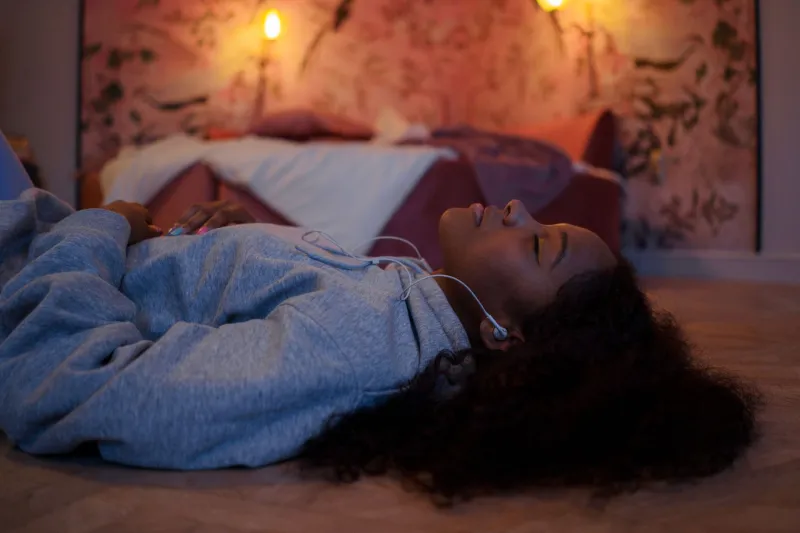
Several listeners we spoke to described using ambient soundscapes specifically to give themselves permission to feel things they'd been suppressing. One woman from Atlanta talked about putting on a two-hour ambient piece after her mother died and just letting it run while she sat on her kitchen floor. "I didn't need it to say anything," she said. "I just needed something to be in the room with me."
Why This Genre, Why Now
It's worth asking why ambient music in particular seems to be filling this role, rather than classical music or lo-fi hip-hop or any number of other genres that also traffic in atmosphere.
Part of the answer is probably the electronic element. There's something about synthesized sound — tones that don't come from a physical instrument, textures that have no acoustic analog in the natural world — that feels distinctly of this moment. We live in a largely synthetic environment. Screens, processed air, artificial light. Ambient electronic music doesn't fight that reality; it meets us inside it.
And part of the answer is the community that's grown up around the genre. Online spaces dedicated to ambient music — forums, Discord servers, subreddits, Bandcamp rabbit holes — tend to be unusually thoughtful and low-key. People share music with care. They write about what albums mean to them. They recommend records the way you'd recommend a book to someone going through something hard.
The genre's intentional minimalism seems to attract a certain kind of listener: one who's willing to be present, to sit with something slow, to tolerate uncertainty and open-endedness. Those same qualities tend to make for better community members too.
The Sound That Stays
There's no clean resolution to the loneliness paradox that ambient music presents. Music that says almost nothing somehow says everything. Artists who never meet their listeners somehow become companions. Sparse, cold, electronic tones somehow feel warm.
But maybe the paradox is the point. Ambient music works precisely because it doesn't try too hard. It doesn't perform connection — it creates the conditions for it. And in a cultural moment when so much is competing for our attention, our engagement, our emotional labor, something that simply exists alongside you turns out to be exactly what a lot of people need.
The refrigerator hums. The traffic outside fades. You put on something slow and wide and electronic, and for a while, the room doesn't feel quite so empty.
That's not nothing. That might actually be everything.