Nine Hundred Miles for Twelve Seconds of Wind: Inside the Field Recording Road Trip

Photo: Photograph by Clem Rutter, Rochester, Kent. (www.clemrutter.net)., CC BY-SA 4.0, via Wikimedia Commons
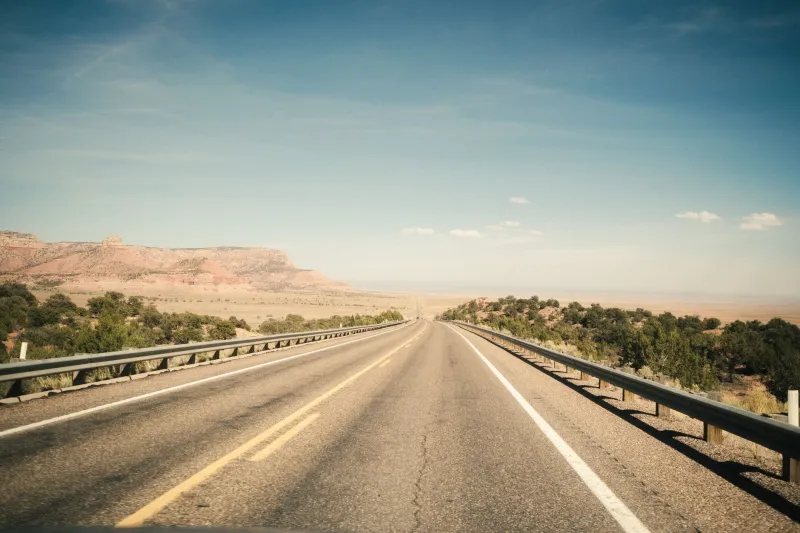
The alarm goes off at 3:40 a.m. in a motel outside Twentynine Palms, California, because the wind through the creosote has a particular way of arriving at dawn and it lasts about an hour before the temperature climbs and the whole soundscape changes character. The recorder is already packed. It has been packed since the previous night, because the previous night ended at eleven with a failed attempt at capturing a dry wash at the wrong time of day.
This is what field recording for ambient music actually looks like in the United States right now: long drives, bad motel coffee, and a very high ratio of failure to usable material.
The Ratio Problem
Ask a working ambient producer how much of a field trip makes it into a finished track and the answers cluster around the same brutal number. Ten minutes of recorded material might yield fifteen seconds in the final mix. A three-day trip might produce one texture that survives to the master.
The reason is that most recordings are not usable. There is a plane. There is a car with a bad exhaust gasket. There is a person talking ninety meters away whose voice somehow ends up in every take. There is your own stomach.
And then there is the deeper reason: a great field recording is not simply clean. It has to have something in it that a synthesizer cannot provide, which usually means a sense of specific place. Generic forest number four is worth nothing. A particular culvert under a particular road in eastern Washington, recorded at a particular water level, is worth a two-day drive.
Gear That Survives the Trip
Most of the artists doing this seriously carry a fairly predictable kit:
- A recorder with good preamps and 32-bit float capture. The last part matters more than anything, because you will overload something eventually, and 32-bit float means the take is not ruined.
- Two or three microphone types. A stereo pair for ambience, a contact mic for surfaces, and increasingly a hydrophone for anything wet.
- Serious wind protection. A foam cover is decoration. You need a blimp and a fur cover, and even then, coastal wind will win.
- Ambisonic capture. A growing number of producers record in first-order or higher-order ambisonics so they can later decode the take into a spatial mix without going back to the site.
- Way too much storage, and a backup drive in the other bag.
One recurring piece of advice from people who have done this for years: never drive to a site planning to record one thing. The thing you came for will not happen. Record everything, badly, and sort it out at home.
Permits, Quiet Hours, and the Ethics of a Fragile Place
The uncomfortable part of this hobby is that the places with the best sound are usually the places with the most rules, and those rules exist for good reason.
Commercial recording in national parks generally requires a permit, and the permit process asks what you are doing and how loud you will be. Drone use in national parks is prohibited outright. Many sites close trails or restrict access during nesting season or pupping season, and a recordist who walks past a closure sign to get a cleaner take is not being artistic, they are being a problem.
There is also the sound itself. Playing bird calls back to provoke a response, a trick borrowed from birders, stresses the animals and is restricted in many places. Broadcasting a low tone to hear how a canyon answers is fun and also, in some locations, disruptive to wildlife and to other visitors who came out there for the quiet you are currently ruining.
A few rules of thumb that experienced recordists tend to converge on:
- Get the permit, even when you think you do not need one. It is paperwork, not a moral failing.
- Leave no trace applies to sound. If a place is silent, your presence should not be the loudest thing in it.
- Be honest about the site in the liner notes. Audiences increasingly want to know whether the water in the track came from a protected watershed or from a drainage ditch.
- Pay attention to tribal land. Some landscapes carry cultural restrictions that no government permit will explain to you. Ask someone who knows.
What the Landscape Does to the Sound
Here is the part that is hard to explain to people who have not done it: American places sound distinctly American.
The desert southwest records as a kind of negative space. Wind moves through very little, so what you capture is mostly air and distance: a wide, hissy, almost toneless bed that works beautifully under a low drone but terrible as a foreground element.
The Pacific Northwest is the opposite. The Hoh Rainforest in Olympic National Park is a dense, dripping, midrange-heavy sound, and when you bring it home and put it under a synth pad, it fights for the same frequencies. Producers end up carving out a hole for the field recording rather than the other way around, which is the correct instinct and also the reason so many PNW-influenced ambient records feel cramped.
Industrial sites, which are increasingly popular on the circuit, give you rhythm nobody has to program. A decommissioned furnace building or a big empty concrete hall produces reverb tails that no plugin models convincingly, mostly because the space is irregular in ways software is not.
And the coastline gives you the thing that every ambient record wants and almost none can fake: a noise source with an envelope. Surf is not steady. It breathes, and that breathing is a slow, arrhythmic pulse that the ear reads as alive.
The Drive Home
Most of these trips end the same way, with a hard drive full of unusable material, a large fuel bill, and two or three takes that are genuinely irreplaceable. The artists who stick with it are not the ones who get the best recordings. They are the ones who go back.
The good news for everyone else is that the resulting music has a quality that is difficult to name and easy to hear: it sounds like somewhere. In a genre with an infinite supply of beautiful, placeless material, that is increasingly the whole point.