Graveyard Shift Frequencies: How Ambient Electronic Music Became the Night Worker's Secret Weapon
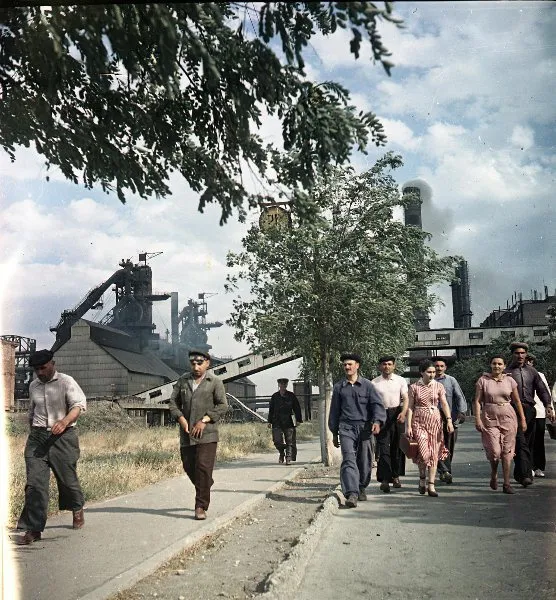
Photo: Vsevold Tarasyevich, CC BY-SA 4.0, via Wikimedia Commons
Somewhere around 3 a.m., when the highway stretches into a flat black ribbon and the radio starts playing the same country ballad for the third time, a lot of truck drivers make a switch. They pull up something slower. Something without words. Something that sounds, as one Reddit commenter put it, "like the inside of a satellite."
That something is ambient electronic music — and it's been quietly colonizing the earbuds and cab speakers of America's night shift workforce for years.
We talk a lot about ambient music as a tool for focus, for sleep, for meditation. But there's a whole demographic that doesn't quite fit any of those boxes — the roughly 15 million Americans who work between 10 p.m. and 6 a.m. For them, ambient isn't about winding down or zoning in. It's about something harder to name: staying functional, staying human, in hours the body was never really designed for.
When Your Clock Is Broken
Here's the basic biology problem. Human circadian rhythms are wired to the sun. When you're working a graveyard shift, you're essentially asking your nervous system to perform at a time it's been biologically programmed to shut down. Cortisol dips. Melatonin rises. Reaction time slows. Decision fatigue sets in faster.
Dr. Allison Brager, a neuroscientist who has studied sleep deprivation in military and shift-work contexts, has described this window — roughly 2 to 5 a.m. — as the body's "circadian nadir," the lowest point in the alertness cycle. It's when errors spike in hospitals. It's when highway accidents cluster. It's when the brain is working hardest just to do the basics.
So what does ambient music actually do in that context? It's not stimulating enough to cause distraction, but it's not silent enough to let the mind drift into microsleep. Researchers studying background auditory environments have found that low-arousal, continuous soundscapes can help maintain a kind of "alert calm" — keeping the prefrontal cortex just engaged enough without triggering the kind of stress response that comes from jarring or unpredictable sound.
For night workers, that's not a nice-to-have. That's the difference between a safe shift and a dangerous one.
The Producers Who Got There First
Some artists in the ambient space have been thinking about this audience for a while — even if they didn't always have a name for them.
Chicago-based producer Marcus Elwell, who releases music under the alias Pale Meridian, started getting messages from night shift nurses about five years ago after uploading a two-hour drone piece to Bandcamp. "I made that record for insomniacs, honestly," he says. "But these nurses started writing me. ICU nurses, ER nurses. They were playing it on their phones during charting, during the quiet stretches. One of them said it helped her feel less alone at 4 a.m."
That feedback changed how Elwell thinks about his work. His subsequent releases have been deliberately structured around what he calls "sustained attention arcs" — long, gradual evolutions that don't demand active listening but reward it. No sudden drops. No sharp tonal shifts. "I think about someone who needs to be alert but not wired," he says. "That's a very specific state to support."
On the West Coast, Portland producer Sable Drift (real name withheld at her request) has built an entire catalog around what she describes as "functional nocturnal sound." Her releases often come with timestamps in the liner notes — not track times, but suggested listening windows. "This one is for 1 to 3 a.m.," reads the notes on her 2022 release Hollowed Meridian. "This one is for the hour before dawn."
"Night workers aren't a niche," she says. "They're a massive, underserved community. And their relationship to sound is genuinely different. They're not putting on music to relax. They're using it to stay tethered."
What Night Ears Want
If you spend any time in the ambient corners of Reddit, Discord, or YouTube comments, the night shift listener has a distinct voice. They're specific about what works and what doesn't.
Too much bass, and it becomes soporific — a problem when you're driving 80,000 pounds down I-40. Too much high-end shimmer, and it starts to feel abrasive after hour three. Tempo matters, too. Pieces that pulse too close to a resting heart rate can actually encourage drowsiness. The sweet spot, as many listeners describe it, is something with just enough internal movement to feel alive — like watching water — without ever demanding attention.
Texture is the word that comes up most. Grainy pads. Soft static. The hiss of tape. These qualities seem to create what one security guard in a YouTube comment thread memorably called "the feeling of being inside something warm while the world stays outside."
There's also a communal dimension that's easy to miss. A lot of these listeners are isolated by design — alone in a cab, alone at a desk, alone in a corridor at 3 a.m. Ambient music, for them, performs a kind of companionship function. It fills the silence in a way that doesn't demand reciprocation.
Building a Catalog for the Hours Nobody Sees
A few artists are now explicitly marketing to this audience, which is a relatively new development. Bandcamp tags like "night shift," "late night work," and "graveyard ambient" have started appearing with more frequency. Some producers are releasing music with metadata that surfaces it in late-night Spotify algorithmic queues.
But the most interesting development might be the community building happening around this shared listening experience. Discord servers dedicated to ambient music have entire channels now for night workers — places to share what's playing at 4 a.m. in a hospital break room in Ohio, or what's keeping someone company on a cross-country haul through New Mexico.
Elwell checks in on those communities regularly. "These people are some of the most thoughtful listeners I've ever encountered," he says. "They're not passively consuming. They're actively in relationship with the music because they need it to do something real."
That's a different kind of listener than the wellness app user or the focus-playlist subscriber. The night shift worker isn't optimizing productivity or chasing a mood. They're doing something older and more essential: using sound to survive an environment the human body wasn't built for.
The Hours That Belong to Them
There's something quietly beautiful about the idea that ambient electronic music — a genre that's spent decades being called niche, cerebral, even inaccessible — has found one of its most devoted audiences among people who stock shelves, monitor patients, guard buildings, and drive through the dark.
These listeners aren't critics. They're not chasing the next interesting release. They're just people who discovered, somewhere around the second hour of a night that feels endless, that certain sounds make the dark feel less heavy.
For producers willing to think about who's actually on the other end of their music, that's worth something. The night shift crowd isn't waiting for the industry to find them. They already found the music. They just want more of it — and they want it built for the hours nobody else is awake to hear.