Sacred Frequencies: Inside the Home Studios Americans Are Building as Creative Sanctuaries

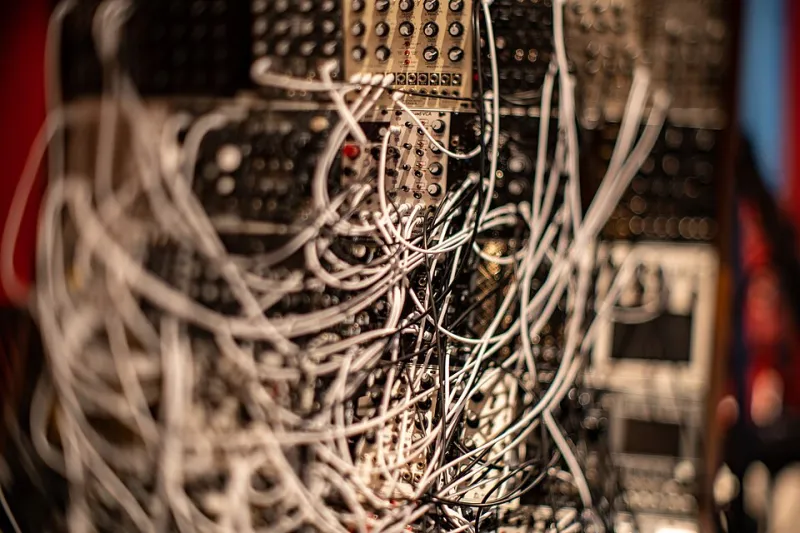
Photo: Shixart1985, CC BY 2.0, via Wikimedia Commons
There's a moment every producer knows — the one where you sit down at your desk, surrounded by cables and half-patched synths, and something just clicks. The room feels right. The light is right. You're not fighting the space anymore; you're inside it. For a growing number of ambient and electronic artists across the US, that feeling isn't accidental. It's engineered.
Home studio design has quietly evolved from a purely functional pursuit into something closer to intentional living. Producers are treating their creative rooms less like equipment storage and more like personal sanctuaries — spaces that reflect their sonic identity before a single note is played. Think of it as the physical counterpart to the music itself: layered, atmospheric, and deeply considered.
More Than Gear Placement
For Portland-based producer Mara Solano, who releases ambient drone work under the name Pale Meridian, the transformation started with a move into a smaller apartment. "I had to be ruthless about what stayed," she says. "And weirdly, losing floor space made me think harder about what the room was actually for." She painted the walls a muted sage, brought in a secondhand rattan chair she never sits in but always sees, and hung a single piece of woven textile above her Moog Matriarch. "It sounds ridiculous, but the room stopped feeling like a workshop and started feeling like a place I wanted to be."
That distinction — between a place you work and a place you inhabit — is at the heart of this trend. And it's not just aesthetic. Artists are increasingly citing their physical environment as a direct influence on the music they make.
Chicago-based producer Dev Anand, who records atmospheric electronic music as Stillwater Grid, describes his studio as "the first instrument I set up every time I start a project." His space incorporates soft directional lighting on dimmers, a small shelf of objects collected from travels — stones, seed pods, a piece of sea glass — and a carefully chosen rug that absorbs low-end reflections while anchoring the room visually. "I'm not an interior designer," he laughs. "But I know that when the room feels cluttered or harsh, my music comes out cluttered and harsh. It's that direct."
Feng Shui Meets Sonic Design
The overlap between ancient spatial philosophy and acoustic treatment is less strange than it sounds. Feng shui, at its core, is about energy flow — and so is studio acoustics. Both disciplines ask the same question: how does what's in this room shape what moves through it?
Los Angeles producer Celine Park, who makes slow-evolving generative soundscapes, consulted a feng shui practitioner before setting up her Silver Lake studio. "I wasn't going full mystical about it," she clarifies. "I just thought, these principles have been refining spatial awareness for centuries. Why wouldn't I at least consider them?" The practitioner suggested she avoid placing her primary workstation with her back to the door — a classic feng shui principle tied to psychological ease — and recommended she introduce a small water element near the room's entrance. She added a tabletop fountain. "I know it sounds like a spa," she admits, "but the ambient sound of moving water in the background has actually shown up in a few of my tracks."
From a purely acoustic standpoint, many feng shui-adjacent instincts align with what sound engineers already recommend. Avoiding hard parallel walls, breaking up flat surfaces, distributing mass around the room's perimeter — these practices reduce flutter echo and standing waves while also, it turns out, creating a more psychologically grounded environment.
Practical Moves That Double as Design
You don't need to hire a consultant or gut your spare bedroom to start thinking this way. A few targeted changes can shift both the acoustic character and the feel of a space significantly.
Bookshelves as diffusers. A floor-to-ceiling bookshelf filled with irregularly sized objects — books, synth manuals, small sculptures — is one of the most effective natural diffusers you can add to a room. It breaks up sound reflections and adds visual warmth simultaneously.
Rugs over bare floors. This one is Studio Acoustics 101, but the choice of rug matters more than most people think. A thick, densely woven rug with irregular texture absorbs more mid and high-frequency energy than a flat-pile option. Choose something you'd want to look at for hours, because you will.
Soft zones away from the desk. Brooklyn-based ambient producer James Okafor — who records as Tidal Signal — keeps a floor cushion and a small Bluetooth speaker in the corner of his studio specifically for non-screen listening. "I do a lot of my best A/B listening from across the room, sitting on the floor," he says. "It breaks the mix engineer brain and lets me just hear it." That corner, he adds, has become the emotional center of his studio. "It's where the music lives before it goes anywhere."
Lighting as a workflow tool. Warm, low-level lighting in the 2700K range has been shown to support creative and relaxed mental states — which maps almost perfectly to the headspace ambient production requires. Overhead fluorescents are the enemy. Lamps, string lights, and bias lighting behind monitors are your allies.
The Room as the First Track
What's compelling about this movement isn't that producers are suddenly decorating. It's that they're recognizing the environment as part of the creative process — not separate from it. The space you build shapes the sounds you reach for, the moods you explore, and the patience you bring to slow, evolving compositions.
Mara Solano puts it simply: "When I walk into my studio, I want to feel like I'm already inside the music. The room should be doing some of the work before I touch anything."
That's a different way of thinking about home studio design — and honestly, it sounds exactly right.