After Midnight, Before Streaming: The Public Radio Shows That Taught America How to Listen
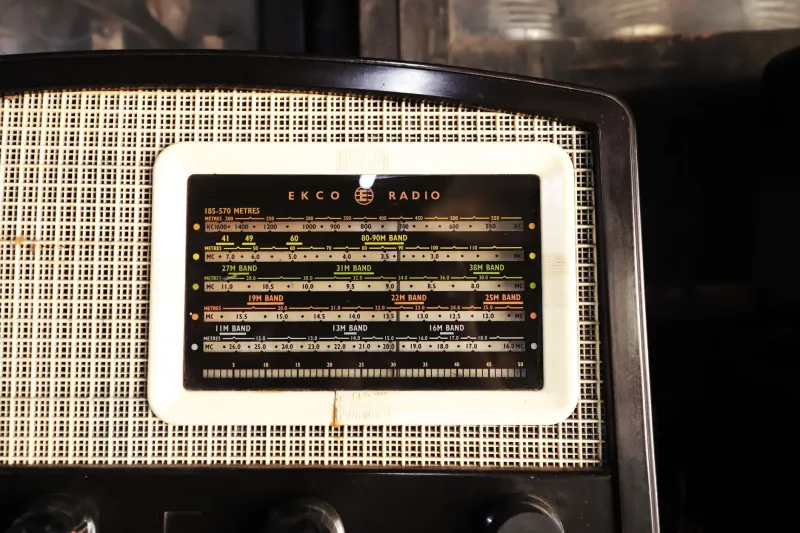
Long before Spotify had a 'Deep Focus' playlist, there was a radio signal. It arrived late at night, often after the local news had signed off and the station had switched to something stranger. On public radio frequencies across the U.S., ambient and electronic music found a small but devoted audience—insomniacs, night-shift workers, art students, and kids scanning the dial for something they couldn't name.
The Dial as a Portal
Programs like Hearts of Space and Echoes didn't just fill dead air. They created a room. Hearts of Space began in 1973 on KPFA in Berkeley and later went national, with host Stephen Hill guiding listeners through what he called 'spacemusic.' Echoes, launched by John Diliberto in 1989, widened the frame to include ambient, electronic, world, and avant-garde sounds. For many Americans, these shows were the first place where a synthesizer drone wasn't a special effect or a sci-fi cliché. It was a place to live for an hour.
The broadcasts were syndicated to public stations, which meant they could reach a teenager in rural Kansas as easily as a commuter in Seattle. The signal was democratic in a way that streaming still isn't. You didn't need a subscription or a smart speaker. You just needed to be awake.
Human Curation Before the Algorithm
The hosts were not algorithms. They were people with libraries, obsessions, and a sense of sequence. A set might move from Brian Eno to a field recording of Icelandic glaciers to a new release by a bedroom producer in Ohio. The transitions mattered. The voice mattered. A brief introduction could give context without killing the mystery. That kind of curation taught listeners to trust texture over hooks, to sit with a track that didn't announce itself in the first ten seconds. In a streaming era built on skip rates, that patience feels almost radical.
What the Hosts Actually Taught
They taught that ambient wasn't wallpaper; it was architecture. They modeled attention. The radio show format—uninterrupted blocks, careful sequencing, a human voice at the edges—was a training ground. Listeners learned terms like drone, field recording, modular synth, and generative. They learned that electronic music could be gentle, eerie, spiritual, or all three. They learned to follow a label or a scene. These lessons didn't disappear when the signal did; they became the taste that streaming services now try to predict.
The Producers Who Grew Up Listening
Today's ambient producers often cite these shows as formative. Not because they sampled them, but because they heard them at the right age. A teenager in Nebraska might have tuned in after midnight and heard a longform piece that changed what they thought music was allowed to do. Years later, they're making their own longform pieces. The lineage is direct but quiet. Public radio didn't create the genre, but it created listeners who would demand more from it.
Why the Influence Lingers
Streaming can serve you a thousand ambient tracks, but it rarely teaches you how to listen. Public radio did both. The shows were curated by hand, with context and care, and they assumed you might stay for the whole hour. That assumption is a kind of respect. It's also a model for anyone building playlists today: sequence matters, voice matters, and the space between tracks is part of the composition. The algorithms can recommend, but they can't host.
The Signal That Didn't Fade
The original broadcasts may be harder to find, but their influence is everywhere—in the slow-burn playlists, in the artist interviews, in the way producers talk about 'building a world' instead of 'making a track.' The airwave ambience didn't vanish. It just moved into the bones of the music. If you've ever let a 12-minute drone play all the way through without reaching for your phone, you might have a late-night public radio host to thank.