Broken Rooms, Beautiful Sound: Why Ambient Producers Are Ditching Acoustic Perfection
There's a moment most ambient producers know well. You've spent weeks — maybe months — building a track inside a carefully treated studio. Foam panels on every wall. Bass traps in every corner. A monitoring setup that cost more than your first car. The mix sounds technically flawless. And then you play it back in your living room, or a friend's apartment, or some weird concrete hallway, and suddenly it breathes. It has weight. It sounds alive in a way it never did under those perfect conditions.
So what's going on?
For a lot of ambient producers, the answer is uncomfortable: the room you were trying to eliminate was actually the instrument you needed most.
The Problem With Perfect
Acoustic treatment exists for good reasons. In genres where clarity and separation are everything — hip-hop, pop, rock — a controlled listening environment is non-negotiable. You need to hear exactly what's on the track without the room coloring your perception. Makes total sense.
But ambient music operates by different rules. The whole point of the genre — its emotional core — is atmosphere. Depth. The feeling of being inside something larger than yourself. And it turns out that the very qualities acoustic treatment is designed to remove — reflections, flutter echo, low-end buildup in corners, the subtle hum of a space — are often what gives ambient sound its sense of place.
Producers working in this space have been quietly talking about this for years. The conversation has gotten louder recently, with more artists openly questioning whether the studio ideal borrowed from commercial music production is actually working against them.
What a Room Actually Gives You
Every physical space has a sonic fingerprint. The dimensions of a room determine which frequencies resonate and which ones cancel out. Hard surfaces create reflections that smear transients in ways that can sound lush or chaotic depending on timing and material. Even the ambient noise floor of a space — traffic outside, an HVAC system, the faint creak of a building settling — contributes to what audio engineers call the "room tone."
For most recording applications, room tone is a problem to be solved. For ambient producers, it can be the entire texture of a piece.
Think about the classic recordings that defined the genre. Brian Eno's early ambient work was famously shaped by accidents and environmental context. Harold Budd's piano recordings leaned into the natural reverb of physical spaces rather than fighting it. More recently, artists like Grouper have built entire aesthetic identities around lo-fi, room-drenched recordings where the space itself feels like a character in the music.
That's not sloppiness. It's a deliberate compositional choice — one that requires a totally different relationship with your recording environment.
The American Basement and the Church Hall
Here in the US, ambient producers have access to a wildly diverse range of accidental recording spaces, and a growing number are treating that as an asset rather than a limitation.
Basements are a particularly American phenomenon — low ceilings, concrete or drywall, unpredictable resonance depending on what's stored down there. Plenty of producers have discovered that a basement with the right dimensions creates a kind of natural compression on low frequencies that no plugin fully replicates. It's not "correct," but it's interesting.
On the other end of the spectrum, artists who've gotten access to churches, gymnasiums, old warehouses, or even parking structures have found that the massive natural reverb tails in those spaces create an immediacy and scale that's almost impossible to fake digitally. A synthesizer pad recorded in a cathedral doesn't just have reverb added to it — it becomes part of that space. The two are inseparable.
Some producers are making this their whole thing. Rather than building a home studio and treating it, they're scouting locations the way a photographer scouts light.
When Imperfection Becomes the Signal
There's a philosophical shift that happens when you start thinking this way. Instead of asking "how do I remove the room from my recording," you start asking "what is this room telling me?"
That shift changes everything about how you work. You start listening differently before you even plug anything in. You move around a space, clap your hands, drag a chair across the floor, just to understand what you're dealing with. You start making compositional decisions based on the acoustic character of where you are rather than despite it.
This is something field recording practitioners have understood for a long time — the environment isn't background noise, it's the composition. Ambient electronic producers are increasingly borrowing that mindset and applying it to their studio work, even when "the studio" is a spare bedroom in Albuquerque or a rented rehearsal space in Detroit.
The unexpected side effect is that records made this way often feel more located. They have a sense of somewhere-ness that perfectly treated productions sometimes lack. You can't always name what you're hearing, but something in the listening experience communicates that this sound happened in a real place, not a vacuum.
The Gear That Loves Broken Rooms
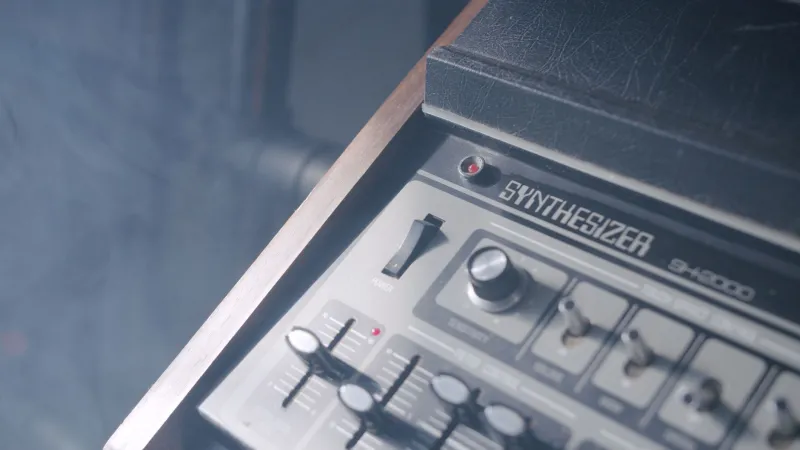
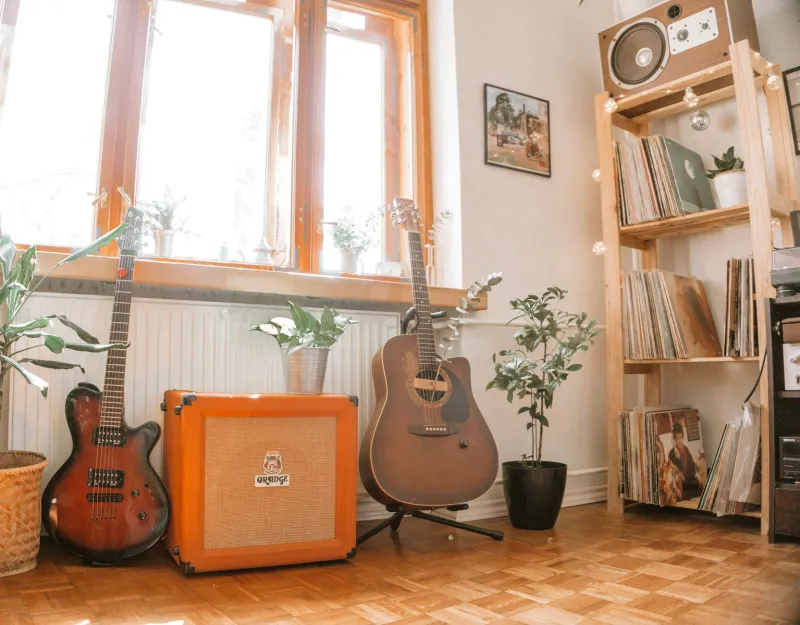
Certain tools play especially well with imperfect acoustics. Hardware synthesizers recorded through a room — rather than direct-in — pick up the space in ways that feel organic rather than processed. Acoustic instruments like piano, guitar, or even voice recorded with room mics in untreated spaces can create a kind of blur between the instrument and its environment that sits beautifully in an ambient mix.
Convolution reverbs have gotten incredibly good at capturing real spaces, but many producers argue there's still a quality difference when the space is baked in at the source. It's the difference between photographing a landscape and printing a photograph of a landscape — similar, but not identical.
Even modular synthesizers, which are often thought of as purely electronic instruments, can take on a completely different character when played into a room and re-recorded. The space responds to the sound, and the sound responds to the space.
Letting Go of the Control Room Fantasy
None of this means acoustic treatment is useless or that every ambient producer should tear the foam off their walls. Monitoring accuracy still matters. Knowing what your mix actually sounds like is still important.
But there's a real conversation worth having about whether the professional studio model — optimized for transparency and control — is the right template for music that's fundamentally about texture and immersion. A lot of ambient producers are starting to answer that question with a pretty firm "no."
The most interesting work happening in this genre right now often comes from people who've stopped trying to eliminate their environment and started collaborating with it. The hiss, the flutter, the low-end room buildup — these aren't problems waiting to be solved. They're the sound of a real place, and sometimes that's exactly what a piece of music needs to feel true.
Your broken room might just be your best instrument.