Never in the Same Room: How Ambient Producers Are Making Their Best Work Apart

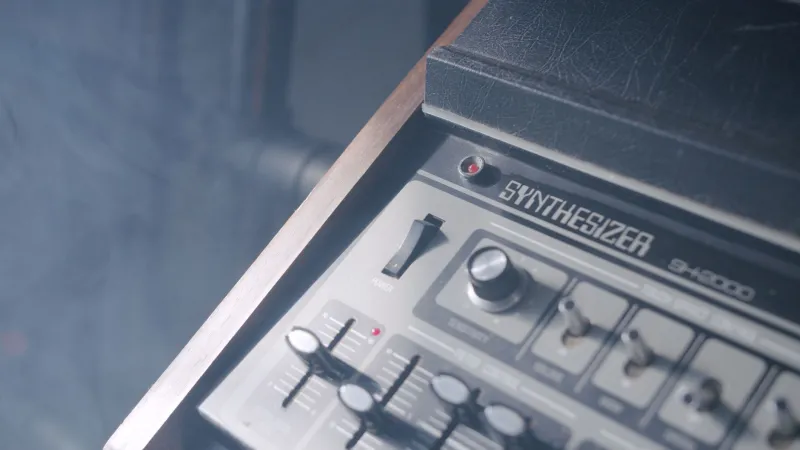
Photo by Photo by Troy T on Unsplash on Unsplash
There's a certain irony baked into the way ambient music gets made. The genre practically invented the idea of solitary, interior creativity — one person, a room, a rack of gear, and hours of uninterrupted silence. And yet, some of the most compelling ambient and electronic work emerging right now is deeply collaborative. The twist? The people making it together are rarely, if ever, in the same physical space.
Call it the collaboration paradox. The very conditions that make ambient production feel so personal — the isolation, the patience, the slow accumulation of layers — turn out to be surprisingly well-suited to long-distance creative partnerships. When you're already working alone at 2 a.m., sending a stem file to someone in Portland or Pittsburgh doesn't feel all that different from just... continuing your session.
Why Distance Actually Works in Ambient's Favor
Traditional studio collaboration carries a certain pressure. You're in the same room, the clock is running, and there's a social dynamic that can subtly push artists toward consensus rather than genuine experimentation. Someone floats an idea, someone else nods, and before long you've got a record that sounds like a compromise.
Ambient and electronic music sidesteps a lot of that friction when it goes remote. The asynchronous nature of file-sharing workflows — where one artist lays down a foundation, sends it off, and then waits days or even weeks for a response — creates breathing room that's genuinely rare in creative partnerships. The collaborator on the other end isn't reacting in real time. They're sitting with the material, letting it settle, responding from a deeper place.
That lag, which might feel like a limitation, often functions as a creative advantage. Ideas get space to breathe. Contributions feel more considered. And because neither artist is watching the other work, there's less ego involved in the decision-making.
The Toolbox Enabling Long-Distance Creativity
None of this would be possible without a pretty remarkable set of tools that have become standard in home studios across the country. Platforms like Splice and Dropbox handle the raw logistics of moving large audio files around without much friction. DAWs like Ableton Live and Logic Pro have made it easy to share project files in formats that collaborators can actually open and build on, even if they're running different setups.
For producers who want something closer to a real-time experience, tools like Audiomovers Listento allow one artist to stream audio directly into another's headphones during a session, even across thousands of miles. It's not quite the same as being in the room, but it's close enough to enable genuine back-and-forth.
Then there's the communication layer. Voice memos, annotated screenshots, even short video clips of a producer tweaking a filter cutoff — these informal exchanges have become a kind of creative language between remote collaborators. The conversation around the music often matters as much as the music itself.
Case Studies Worth Paying Attention To
Look at the working relationship between artists like Grouper and her various collaborators over the years, or the extended transatlantic exchanges that shaped records by artists in the Kranky and Mexican Summer orbits. These aren't one-off experiments — they're sustained creative relationships built entirely on trust, shared taste, and the willingness to let go of control.
Closer to the present moment, producers in the American experimental electronic scene have talked openly about how the pandemic years essentially forced them into remote collaboration — and how many of them never went back to the old way of doing things. What started as necessity became preference. The isolation of those years, uncomfortable as it was, produced some genuinely surprising creative partnerships between artists who might never have found each other in a conventional industry context.
A producer based in Chicago might send a drone piece to someone in rural Vermont, who strips it down, adds field recordings of frozen lake ice, and returns something almost unrecognizable — but better. That kind of transformation is harder to achieve when two people are sitting next to each other, each instinctively protective of their original contribution.
The Solitary Nature of Ambient as a Hidden Social Asset
Here's the part that doesn't get talked about enough: ambient producers, almost by definition, are comfortable sitting alone with sound. That comfort level translates directly into patience with asynchronous collaboration. Waiting two weeks for a collaborator to respond to a stem file isn't frustrating when you're someone who already spends hours listening to a single reverb tail evolve. You've built up a tolerance for slow time.
That same tolerance makes ambient artists unusually good at letting go. When you send a file into the ether and genuinely don't know what's going to come back, you have to release your attachment to what you originally made. That's a skill. And it opens the door to results that a more controlling, in-person dynamic would never allow.
There's also something about the genre's relationship to texture and atmosphere that makes it particularly well-suited to layered, non-linear construction. Unlike a song with a fixed structure that two people have to agree on in real time, an ambient piece can absorb contributions from multiple directions without losing coherence. It's a format that invites accumulation.
What This Means for Artists Just Getting Started
If you're a producer who's been treating your setup as a solo operation, the remote collaboration model is genuinely worth exploring — and the barrier to entry is lower than it's ever been. You don't need a label connection or an industry introduction. You need a decent file-sharing setup, a willingness to communicate clearly about your vision, and the ability to trust someone else with your unfinished work.
Online communities built around ambient and experimental music — forums, Discord servers, subreddits dedicated to specific subgenres — have become real incubators for these kinds of partnerships. Artists who've never met in person are making records together, releasing them on Bandcamp, and building audiences that cross state lines without anyone ever booking a flight.
The collaboration paradox, it turns out, isn't really a paradox at all. The solitude that defines ambient production doesn't close the door on partnership — it just changes what partnership looks like. And increasingly, what it looks like is two people, in two different rooms, making something neither of them could have made alone.