Sound Becomes Space: The Artists Bringing Ambient Electronic Music Off the Screen and Into the Room
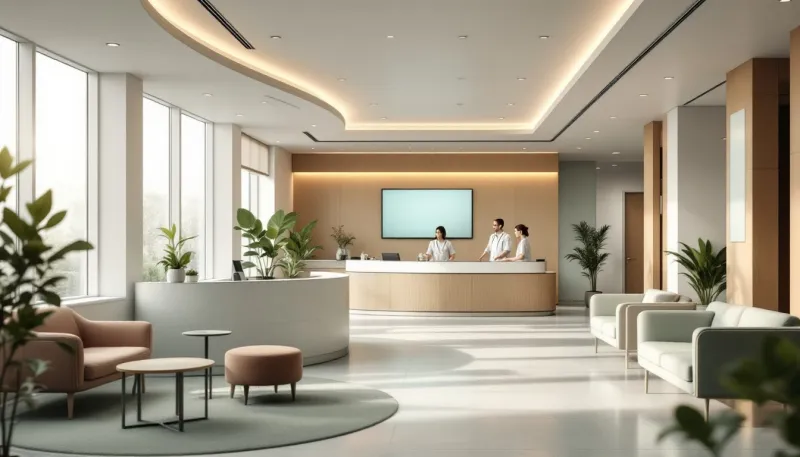
Photo: modern hospital lobby with ambient lighting and contemporary art installation interior, via images.stockcake.com
Most ambient music is a private experience. You find it late at night, you put your headphones on, and you let it take you somewhere. The relationship between listener and sound is intimate, personal, almost secret. But something interesting is happening at the edges of that model — and it's changing not just how ambient music is heard, but where.
Across the United States, electronic ambient compositions are showing up in places you might not expect: the waiting areas of cancer treatment centers in the Pacific Northwest, the open-plan floors of tech companies in Austin and Seattle, the atrium of a children's museum in Minneapolis. These aren't playlists someone threw on Spotify. They're custom, site-specific sonic environments — original works commissioned from ambient artists and engineered to shape how people feel in a particular physical space.
The field doesn't have a universally agreed-upon name yet. Some call it "environmental sound design." Others use "acoustic architecture" or "immersive audio installation." But the artists doing the work tend to just call it what it is: making music for rooms.
Why Institutions Are Finally Listening
The idea that sound affects human behavior isn't new — retail stores have known for decades that music tempo influences how long customers linger. What's changed is the sophistication of the approach and the range of institutions willing to invest in it.
Hospitals, in particular, have become significant early adopters. Research published in journals including the Journal of Advanced Nursing and HERD: Health Environments Research & Design has consistently linked carefully designed sonic environments to measurable reductions in patient anxiety, lower perceived pain levels, and even faster recovery times in some contexts. For healthcare administrators already investing heavily in patient experience, custom ambient sound design is starting to look less like an indulgence and more like an evidence-based intervention.
Offices are moving in a similar direction, though for different reasons. The post-pandemic return-to-office push has forced companies to rethink what the physical workplace actually offers that home doesn't. Ambient sound design — the kind that reduces acoustic fatigue in open floor plans without the deadening effect of total silence — has emerged as one answer.
"There's a real problem in most open offices where sound just bounces everywhere," explains Portland-based sound designer and ambient artist Cassandra Weir, who has spent the last four years working almost exclusively on institutional projects. "People are distracted, they feel exposed, they can't focus. But total silence creates its own anxiety. What you want is a thoughtfully layered sonic environment that gives people's brains something to rest on without demanding attention."
The Art of Disappearing Into a Room
Weir's work is a useful case study in what this kind of practice actually looks like in the real world. Her process begins well before she writes a single note. She visits the space, often multiple times. She listens to its existing acoustic character — the way sound bounces off the floors, the frequencies the HVAC system produces, the ambient hum of the building itself. Then she starts composing around and with those elements rather than against them.
"A lot of people think you're fighting the room," she says. "You're not. You're in conversation with it. The building is already making sound. My job is to shape that conversation into something that serves the people inside."
The technical demands of this work are genuinely different from bedroom production. A track that sounds lush and enveloping through studio monitors or headphones can fall apart completely when played through a multi-speaker distributed audio system installed in a 40-foot-high atrium. Frequency response changes. Spatial imaging behaves differently. What reads as "atmospheric" at home can sound thin or dissonant when spread across a large physical environment.
This means artists working in the installation space need fluency not just in music production but in acoustic engineering, speaker placement, signal routing, and the technical specifications of commercial audio systems. Many collaborate with acoustic consultants or AV integrators — a pairing that would have seemed unusual in ambient music circles even five years ago.
New Creative Challenges, New Creative Freedoms
For artists like Marcus Drell, who records ambient electronic music as Slow Threshold and recently completed a year-long residency creating soundscapes for a network of VA medical centers in the Midwest, the shift from headphone music to spatial installation opened unexpected creative territory.
"When you're making music for an album, there's a beginning and an end," Drell says. "When you're making music for a hospital waiting room, it runs for twelve hours a day, seven days a week. That completely changes how you think about structure, about repetition, about what you can and can't ask of a listener who didn't choose to be there."
His VA project involved creating a generative system — a series of loosely structured sonic elements that recombine in slightly different ways over time, ensuring that no two hours of the day sound identical while maintaining a consistent emotional register. The result is music that functions almost like weather: always present, always shifting, never demanding to be noticed.
"The goal is for people to feel better without knowing why," Drell says. "If someone walks out of that waiting room and thinks 'the music was nice,' I've done my job. If they walk out and just feel a little less anxious than when they walked in, that's the real win."
What This Means for the Ambient Community
The growth of ambient installation work raises interesting questions for the broader electronic ambient world. It's creating a new category of professional practice — somewhere between composer, sound designer, and spatial architect — that didn't really exist in a formalized way a decade ago.
It's also shifting how some listeners encounter the genre for the first time. Someone sitting in a hospital waiting room or a thoughtfully designed office isn't necessarily seeking out ambient music. But if the experience lands — if it genuinely changes how they feel in that space — it can open a door. From there, the journey toward deeper listening, toward the artists and productions and communities that make up the world of electronic ambient, is a short one.
The horizon, as always, is expanding. It just turns out some of it is indoors now.