The Emptier It Sounds, the Harder It Was to Make
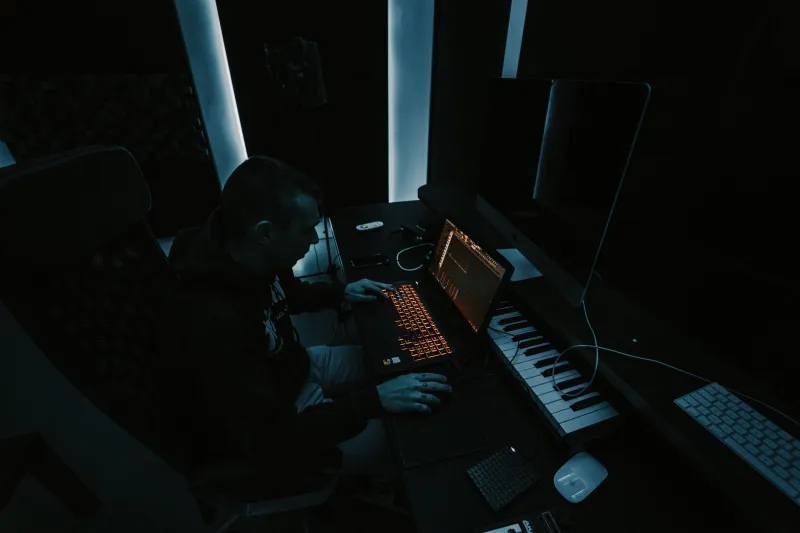
There's a moment every new ambient producer hits — usually sometime around their third or fourth attempt at making something genuinely sparse and atmospheric — where they stare at their DAW and think: why does this sound like nothing?
Not nothing in a zen, Brian Eno kind of way. Nothing in a broken, flat, lifeless kind of way.
The pad they layered sounds thin. The silence between notes feels awkward instead of intentional. The whole thing has this vague, unfinished quality that no amount of reverb seems to fix. Meanwhile, they pull up a track by someone like Stars of the Lid or Taylor Deupree and wonder how a piece built on almost no elements can feel so impossibly full, so architecturally precise.
Here's the answer nobody tells beginners upfront: ambient minimalism is one of the most technically demanding disciplines in electronic music. The emptier it sounds, the more someone probably agonized over every single decision that shaped it.
The Myth of the Empty Track
When most people imagine ambient production, they picture a laptop, maybe a soft synth or two, and a lot of reverb. And sure, you can start there. But the tracks that actually hold up — the ones that feel like they occupy physical space, that shift almost imperceptibly over twenty minutes without losing your attention — those are almost never simple under the hood.
Producer and sound designer Marcus Hale, who runs a small studio out of Portland, Oregon, put it bluntly in a recent conversation: "People hear one note and assume it was easy. What they don't hear is the seventeen takes before it, the three different reverb chains, the subtle pitch modulation I spent two hours dialing in, and the EQ cuts that took out everything that would've made it sound like a preset."
That's the paradox in action. Dense electronic music — think layered techno, complex IDM, or orchestral synth work — gives producers a lot of places to hide. Busy arrangements mask imperfect sounds. Constant rhythmic movement keeps listeners' attention from settling on any one element long enough to notice its flaws. Ambient music offers none of those escape routes. When you strip a track down to three elements, each one has to be immaculate. Each silence has to be earned.
The Gear Isn't Just Vanity
Ask any working ambient producer what's on their signal chain for a minimalist piece and brace yourself. High-quality reverb units — hardware or meticulously licensed software — are almost non-negotiable. Not because reverb is a shortcut, but because the wrong reverb on a sparse sound is immediately, painfully obvious. The difference between a $30 plugin reverb and a Bricasti M7 emulation (or the real thing, if you're lucky) isn't subtle when that reverb is carrying 40% of your track's emotional weight.
Then there's the matter of preamps, converters, and monitoring. In dense music, a slightly muddy low-mid response in your monitors might not matter much. In a track where a single cello sample sits in a field of near-silence, you need to hear exactly what's happening at every frequency. Producers working in this space often invest heavily in monitor quality before they invest in sound sources, precisely because their work demands that level of clarity.
Modular synthesizers also show up constantly in serious ambient production — not because they're trendy (though they are), but because the unpredictability of analog circuitry and the ability to create slowly evolving, non-repeating textures is genuinely hard to replicate with software alone. That randomness, carefully managed, is what gives a lot of high-end ambient music its sense of being alive.
Processing Knowledge Is the Real Instrument
Gear aside, the deeper skill gap between a beginner ambient track and a professional one usually comes down to processing knowledge. Specifically, knowing what to remove.
EQ in ambient production is often more about subtraction than addition. Carving out specific frequency ranges — a narrow cut around 300-400Hz to reduce that boxy quality in a pad, a gentle high-shelf roll-off to keep a reverb tail from becoming harsh over time — requires knowing what you're listening for and having the monitoring environment to hear it. That's not beginner territory. It takes time, reference tracks, and a lot of critical listening to develop.
Compression in ambient music is its own discipline. Heavy-handed dynamics processing can kill the natural breath of a slowly evolving sound. But zero compression on a track meant for streaming means it might sound completely different across headphones, a car stereo, and a phone speaker — all places US listeners are going to encounter it. Getting that balance right, maintaining dynamic range while ensuring the piece translates across playback systems, is genuinely difficult.
And then there's the question of arrangement — which in ambient music is less about structure and more about pacing. Knowing when to let something breathe, when a subtle filter movement will re-engage a drifting listener, when to introduce a new element so gradually that it feels like it was always there: these are craft decisions that take years to develop an instinct for.
Why Beginners Get It Backwards
The most common mistake new ambient producers make is treating minimalism as a starting point rather than a destination. They think: I'll just make something simple. But simplicity, in this context, is the result of enormous discipline — not the absence of it.
A useful reframe: instead of thinking "I'll make a track with only three sounds," think "I'll make a track where three sounds are all it needs." That second version requires you to make those three sounds so compelling, so perfectly shaped and placed, that nothing else could improve them. That's a completely different creative challenge.
Producers who work in this space often talk about spending more time on a single pad sound — adjusting attack, release, modulation depth, filter resonance, reverb pre-delay — than they'd spend building an entire beat in another genre. Because in a sparse ambient track, that pad is the track. It has nowhere to hide.
The Payoff Is Real
None of this is meant to be discouraging. If anything, understanding the actual difficulty of minimal ambient production should be clarifying. When you hear a track that genuinely sounds like open space — like it's giving you room to think, to exhale, to exist in — you're hearing the result of someone who cared enough to do the hard work of making it seem effortless.
That's a remarkable thing to pull off. And once you understand what it actually takes, you start listening to those tracks completely differently. The silence isn't empty. It's engineered. Every gap between sounds was a decision. Every texture was sculpted. Every frequency that isn't there was deliberately removed.
The ambient producer's paradox is real: quiet is one of the loudest things you can make. And making it well takes more — more skill, more patience, more gear, more knowledge — than almost anything else in electronic music.
So next time someone calls ambient music easy, just smile. You know better now.