Less Gear, More Music: Why the Best Ambient Producers Are Selling Off Half Their Studios

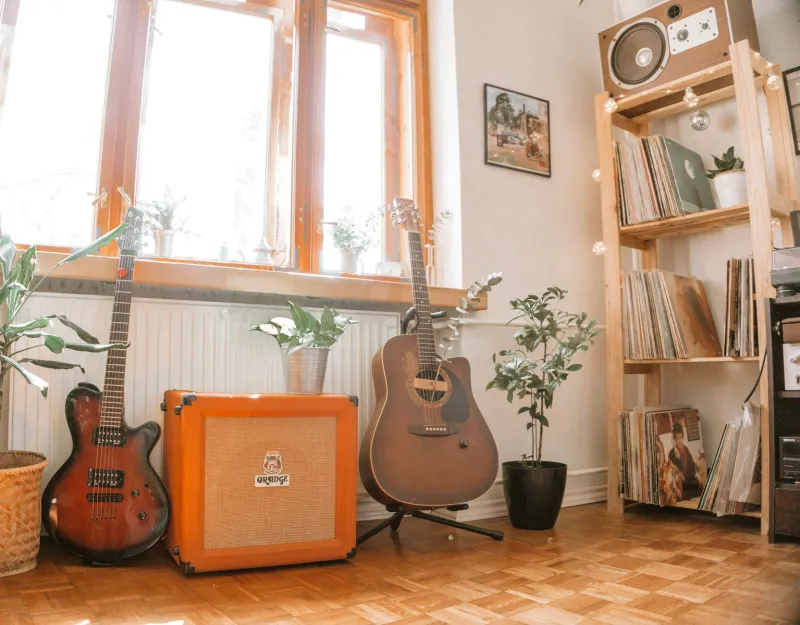
Photo by Photo by Abdallah on Unsplash on Unsplash
There's a particular kind of paralysis that sets in when you've got too many options. You sit down to make something, and instead of making it, you spend forty-five minutes auditioning synth patches. Then another hour wondering if the reverb plugin you've been meaning to try would actually be better for this particular sound. Then it's midnight, you've got nothing recorded, and the gear collection you worked so hard to build is staring back at you like an accusation.
Ambient producers know this feeling intimately. The genre attracts a certain type of tinkerer — curious, detail-obsessed, always chasing the next textural possibility. And that curiosity has a shadow side called GAS: Gear Acquisition Syndrome. It's the belief, persistent and seductive, that the right piece of hardware or the perfect plugin bundle is what stands between you and the music you're trying to make.
But something interesting is happening in studios across the country. A growing number of ambient artists are deliberately walking away from the accumulation game — selling off gear, uninstalling plugins, and imposing strict limits on what they'll allow themselves to use. And the results are turning heads.
The Paradox of Infinite Choice
Psychologists have written about decision fatigue for decades. The more choices you face, the harder each individual decision becomes, and the more mental energy gets burned just navigating options rather than doing actual work. In a creative context, that cognitive drain is especially costly. The headspace you spend evaluating gear is headspace you're not spending on the music itself.
For ambient producers, the problem is particularly acute. The genre lives in nuance — in the space between sounds, in the slow evolution of a texture, in the emotional weight of a specific reverb tail. That kind of deep listening requires a calm, focused mind. It's hard to access that state when you're also managing a hundred-plugin folder and a rack full of modules you bought on impulse.
Producers who've made the switch to constraint-based workflows describe something that sounds almost like relief. When the options narrow, the creative mind stops shopping and starts building.
One Synth, One Reverb, One Rule
Some artists take the constraint approach to its logical extreme. The "one synth" challenge — where a producer commits to creating an entire EP or album using a single instrument — has become something of a rite of passage in ambient circles. What starts as a creative exercise often becomes a revelation.
When you can't reach for something new, you're forced to go deeper into what you already have. That means learning an instrument well past the point most producers stop. It means finding sounds in a piece of gear you never would have discovered if you'd had easier alternatives. It means the instrument starts to feel like a collaborator rather than a tool.
This depth of familiarity shows up in the music. There's a coherence and an intentionality to albums made under strict constraints that's hard to manufacture any other way. The sonic palette feels unified because it literally is — everything came from the same source, shaped by the same hands learning the same machine.
The Hidden Cost of "Just One More"
Gear acquisition has a financial dimension that's worth naming plainly. Synthesizers, audio interfaces, outboard effects, modular systems — these things are expensive. A mid-range hardware synth runs anywhere from five hundred to several thousand dollars. A well-equipped plugin library can cost just as much once you add up all the individual purchases.
For producers who aren't earning significant income from their music, that spending can create a subtle psychological pressure. The gear becomes an investment that needs to justify itself, which means you feel obligated to use it, which means you're making creative decisions based on what you own rather than what the music needs. That's a trap.
Selling off unused gear doesn't just free up cash (though it does that too). It removes the obligation. When everything in your studio is something you actively chose to keep, there's no guilt about the dust-covered module you never figured out, no nagging sense that you're leaving money on the table. The studio becomes a space of possibility rather than a ledger of purchases.
What Producers Are Actually Keeping
When ambient artists talk about stripping down their rigs, a few tools come up repeatedly as keepers. A quality reverb — whether hardware or software — almost always makes the cut. Reverb is so central to the genre's identity that most producers treat it as non-negotiable. Beyond that, the choices get personal fast.
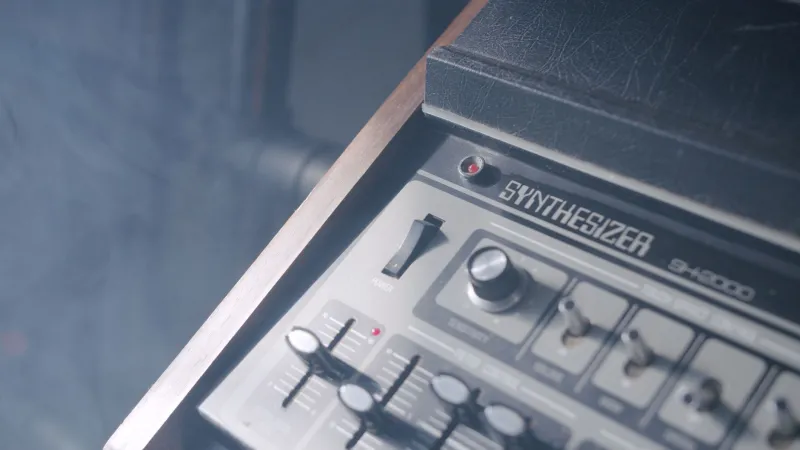
Some swear by a single drone-capable synthesizer and nothing else. Others keep a small modular system with a deliberately limited selection of modules. A few have gone almost entirely in-the-box, paring their plugin library down to a handful of trusted tools they know inside and out. What matters less is the specific gear and more the intentionality behind the selection — the conscious decision to stop adding and start deepening.
Field recording setups often survive the purge too. A portable recorder and a few microphones take up minimal space, cost relatively little, and open up a world of raw material that no synthesizer can replicate. For ambient producers interested in blending organic and electronic textures, field recording equipment is often among the most used and most valued tools in a stripped-down rig.
The Creative Breakthroughs That Follow
Here's what producers who've been through the constraint process consistently report: the music gets weirder, in the best possible way. When you can't solve a creative problem by buying something new, you have to solve it with what you have. That forces lateral thinking. It forces experimentation. It forces you to ask what a tool can do that you've never asked it to do before.
A synthesizer you've had for years starts revealing sounds you didn't know it was capable of. A simple delay pedal becomes a texture generator you've barely scratched the surface of. The limits don't shrink the music — they concentrate it, the way a lens focuses light.
There's also something that happens to the creative relationship with time. Producers who work within constraints tend to report that sessions feel more productive, not because they're making more decisions, but because they're making fewer, better ones. The music moves faster. The vision clarifies sooner. The finished tracks come more often.
Starting the Conversation With Yourself
If your studio is starting to feel more like a showroom than a workspace, the constraint approach might be worth trying — even just as an experiment. Pick one piece of gear. Commit to it for a month. See what happens when you stop looking for the next thing and start listening more carefully to what you already have.
The ambient universe has always been about depth over breadth, about finding infinite space within a single sustained note. Maybe the studio should work the same way.
The horizon isn't out there in some new piece of equipment. It's already in the room. You just have to stop shopping long enough to hear it.