Paying for Peace: How Ambient Music Became a Premium Product in a Noisy America
There's a particular kind of quiet that costs money now. Not the quiet of a rural backyard or a Sunday morning before the neighborhood wakes up — the curated, engineered, intentionally designed quiet that comes wrapped in a subscription fee, a premium hardware purchase, or a ticket to an immersive listening event in a converted warehouse downtown. Ambient music, once the scrappy underdog of electronic genres, has quietly become one of the most monetized corners of the American wellness economy.
And honestly? The numbers are hard to ignore.
From Free to Fee
For most of its history, ambient music existed in the margins. Brian Eno famously said it should be as ignorable as it is interesting — music that didn't demand your attention, didn't ask for much, and certainly didn't come with a premium tier. You could pick up a cassette at a used record shop for a dollar fifty, or later, stream it for free on platforms that paid artists fractions of a cent per play.
But something shifted. As burnout culture reached a kind of critical mass in the US — somewhere around the collision of pandemic isolation, always-on work culture, and the collective realization that our phones were slowly dissolving our attention spans — people started actively seeking out sonic relief. Not just background noise, but thoughtfully constructed soundscapes designed to genuinely calm the nervous system.
That demand created a market. And markets, as they tend to do, found ways to charge for what they were selling.
"I started noticing it when listeners began asking me specifically about the gear I used," says Marcus Hale, an ambient producer based in Portland who's been releasing music under the name Pale Meridian since 2017. "They weren't just curious — they wanted the exact same experience I was creating. That's when I realized people were willing to invest real money in this."
The Hardware Arms Race
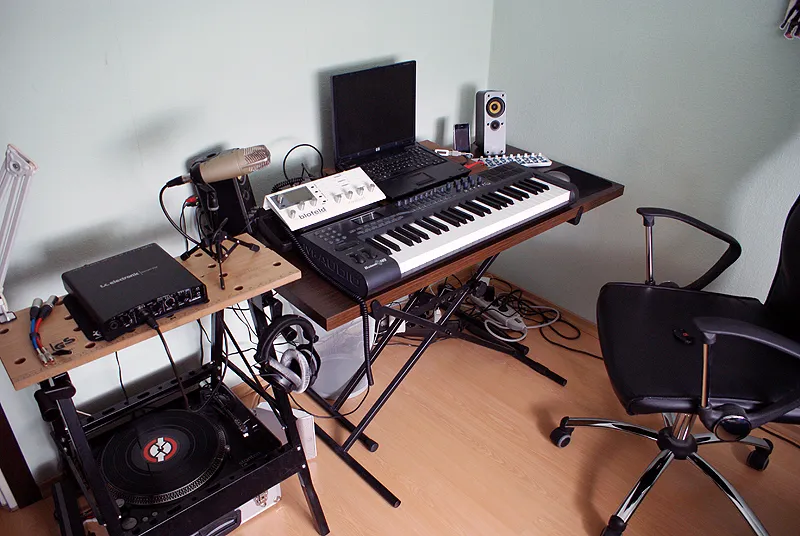
At the production end, the ambient music world has developed its own version of audiophile culture — and audiophile culture has never been cheap. Binaural recording rigs, which use specially positioned microphones to capture three-dimensional sound that listeners experience through headphones, can run anywhere from a few hundred dollars for entry-level setups to well over $10,000 for professional-grade equipment. Spatial audio plugins that simulate immersive listening environments carry subscription costs that rival streaming platforms. And the modular synthesizer market — a cornerstone of contemporary ambient production — has become a multi-million-dollar industry with individual modules regularly priced between $200 and $600 a piece.
For producers serious about the craft, these aren't vanity purchases. The difference between a well-recorded binaural soundscape and a flat stereo mix is genuinely significant, especially for listeners using high-quality headphones. But it does mean that creating premium ambient music increasingly requires premium investment upfront.
"The gear I use now versus what I started with — it's not even comparable," says sound engineer Dana Reyes, who works with several ambient artists in the Pacific Northwest. "And you can hear it. The depth, the way sounds move through the stereo field — that stuff takes real tools to achieve. It also takes real money."
Subscription Serenity
On the listener side, the ambient premium market has found its most accessible entry point in subscription platforms. Services like Endel, which uses AI-driven sound generation to create personalized ambient environments, charge monthly fees for access to their full feature sets. Niche streaming platforms focused exclusively on ambient and experimental electronic music have carved out subscriber bases willing to pay above standard streaming rates for curated, high-quality content.
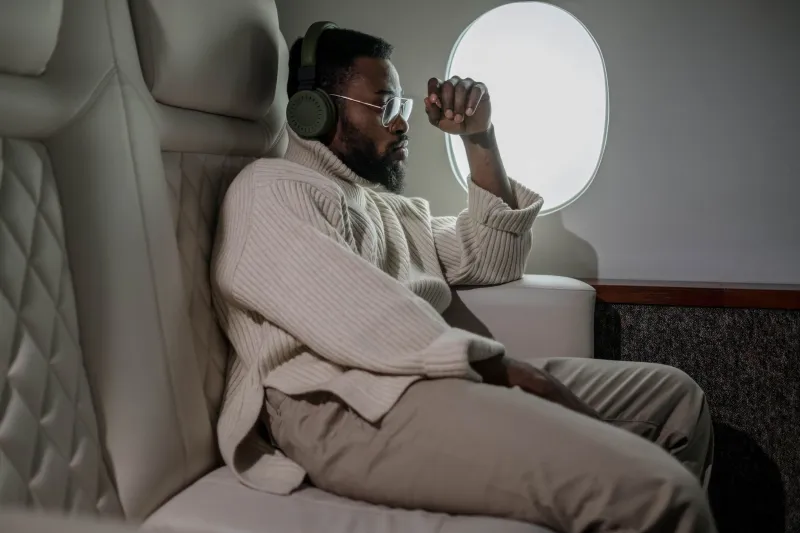
Then there's the hardware side of listening. The rise of high-fidelity headphone culture — think Audeze, Sennheiser HD 800s, or even Apple's AirPods Max at the more accessible end — has created a segment of ambient listeners who are spending $300 to $4,000 just on the playback device. The argument, which holds up to scrutiny, is that ambient music rewards quality playback more than almost any other genre. The subtlety of a slowly evolving drone or the spatial placement of a field recording detail simply doesn't come through on cheap earbuds.
"I spent more on my headphones than I did on my first car," admits Jordan Kessler, a software engineer in Austin who describes ambient listening as his primary form of stress management. "And I don't regret it for a second. It's not a hobby for me — it's genuinely how I decompress. If I'm spending money on a gym membership to take care of my body, why wouldn't I invest in something that takes care of my head?"
Immersive Experiences and the Live Ambient Economy
Perhaps the most striking development in the ambient premium market is the growth of dedicated listening events and immersive sound installations. Across major US cities, venues are hosting ticketed ambient concerts — sometimes called listening sessions — where audiences lie on mats or sit in specially arranged spaces while artists perform extended, spatially designed soundscapes through high-end speaker arrays. Tickets for these events regularly run $30 to $75, with premium front-of-room positions sometimes going higher.
Floatation tank centers, which have grown significantly in popularity over the past decade, have started partnering with ambient artists to offer curated audio experiences during sessions. Some wellness retreats now include bespoke ambient soundscape programming as part of packages that can run several hundred dollars per night.
The message, whether intended or not, is clear: genuine sonic peace is a product, and like most premium products, access isn't universal.
Does Quality Actually Require a Premium Price?
This is where the conversation gets genuinely complicated. Because for every producer investing in a $5,000 binaural rig, there's another creating deeply affecting work on a laptop and a pair of consumer headphones. Some of the most emotionally resonant ambient music in circulation right now was made with modest tools and released for free on Bandcamp.
"I think the premium market exists partly because people need permission to take their own relaxation seriously," says Hale. "If you spend money on something, you're more likely to actually use it, to protect that time. There's almost a psychological function to the expense."
Reyes pushes back slightly on the idea that expensive automatically means better. "High-end gear can elevate good music. It can't create it. The emotional core of a piece — the way it makes you feel — that doesn't come from the equipment."
What the ambient premium market ultimately reveals isn't just about music. It's a mirror held up to a specific American anxiety: the creeping sense that stillness has to be earned, scheduled, and yes, purchased. In a culture that treats busyness as a virtue and silence as something suspicious, paying for peace starts to feel less like a luxury and more like a necessity.
Whether that's a wellness breakthrough or a symptom of something that needs fixing is probably a question worth sitting with — ideally in a quiet room, with good headphones, and something beautiful playing softly in the background.